Attracting birds to a birdhouse is about far more than decoration or backyard enjoyment.
When done correctly, it becomes an act of conservation.

Birdhouses provide safe nesting opportunities at a time when natural habitats are shrinking due to urbanization, climate change, and land-use changes.
This article explores how to attract birds to your birdhouse, with an emphasis on conservation.
Understand Why Birds Use Birdhouses
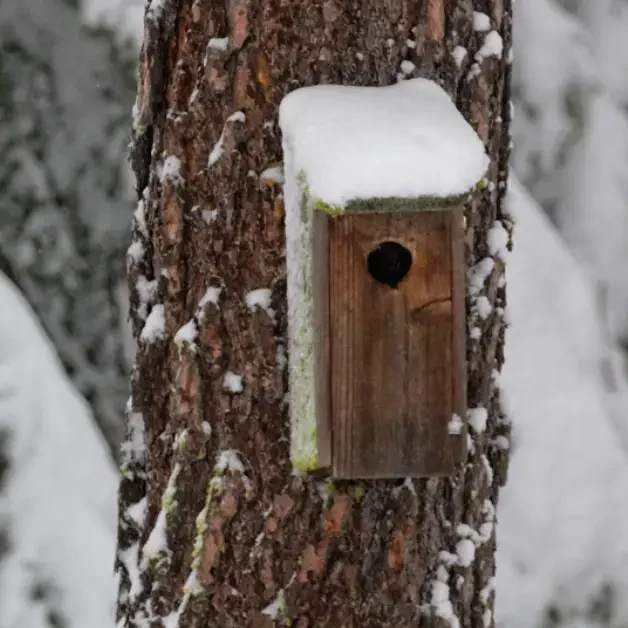
Birdhouses, or nest boxes, are human-made structures that replicate natural nesting sites – such as tree cavities.
Many bird species are known as cavity nesters, and depend on these features to reproduce.
Unfortunately, modern agricultural practices and urban developments often remove dead trees and old growth, eliminating crucial nesting spaces.
While natural cavities are preferred, birds will use birdhouses to nest – providing they meet specific criteria.
Nesting is one of the most vulnerable periods of a birds’ lifecycle. As such, birds will only use a birdhouse if it meets their needs for safety, size, and location.
Understanding these criteria can help us design and maintain birdhouses that genuinely benefit birds.
From a conservation perspective, the goal is not to attract as many birds as possible – although that would be nice.
Instead, we want to provide appropriate housing for native species in a way that supports healthy, sustainable populations.
Choose the Right Birdhouse for Native Species
One of the most important steps in attracting birds is selecting a birdhouse designed for the species native to your area.

Different birds have different requirements for entrance hole size, interior dimensions, and ventilation.
For example chickadees and wrens prefer small entrance holes that exclude larger, aggressive birds, such as the introduced European Starling.
More specialized nesters, such as purple martins, need multi-compartment colony houses, not single boxes.
Avoid decorative birdhouses that prioritize aesthetics over function.
Many novelty houses sold in stores are poorly designed and unsuitable for real nesting. The mass produced and cheap materials used often negatively affect birds via injuries or liable to breaking.
Instead, choose or build birdhouses based on scientifically recommended dimensions published by conservation organizations or ornithological societies.
If you want a birdhouse that deters species such as the European Starling, look for ones that have an entrance hole less than 1.5 inches in diameter.
Using untreated, natural wood such as cedar or pine is best. Avoid pressure-treated lumber or painted interiors, as chemicals can harm birds and their chicks.
Choose the Right Location to Put Your Birdhouse
Even a perfectly designed birdhouse will remain empty if placed incorrectly.
Birds are highly sensitive to location, and proper placement directly affects nesting success.
There are various considerations that should be taken into account.
Height is a key factor. Most smaller songbirds typically nest between 5 to 15 feet above ground.

What habitat is your yard? Is it an open space? Are there lots of trees? An urban environment?
To attract birds to your birdhouse, you need to match the birdhouse to the birds present in your yard habitat. Position birdhouses to avoid intense midday sun and prevailing winds.
Lastly, avoid overcrowding.
If erecting multiple birdhouses, keep a suitable distance between each one, around 15 to 25 feet apart. Crowding can cause increased competition and stress.
Check, Clean and Maintain Your Birdhouse
A birdhouse is not a “set it and forget it” conservation tool.
Regular maintenance ensures that it remains safe and functional year after year.
Annual checks should include regular inspections, proper ventilation and drainage, and replacement where necessary.

Timing Is Key
Understanding bird breeding seasons is crucial.
Most birds begin looking for nesting sites weeks or even months before laying eggs.
Birdhouses should be installed well before the breeding season begins – often late winter or early spring, depending on the species.
Avoid disturbing birdhouses during active nesting. Opening a house or moving it can cause parents to abandon the nest.
Once the season is over, clean out old nesting material to prevent parasites, and prepare the house for the following year.
Should You Put Nesting Material Inside a Birdhouse?
One of the most common questions beginners ask is whether they should add soft materials or twigs to a birdhouse to give nesting birds a head start.
Although this might seem helpful, for most species this isn’t necessary.
We asked our Nest Box Live community: Do you put nesting material in your birdhouse, or leave it empty?
Sarah Fox (Friends of Nest Box Live Facebook Page)
“Empty. I put wood shavings in one year as a base, and the birds removed every last piece.”
Mel Brooks Staines (Friends of Nest Box Live Facebook Page)
“Empty and clean every year.”
Pauline Ross Jones (Friends of Nest Box Live Facebook Page)
“Empty. Birds are fussy.”
However, if you are building a box for species such as woodpeckers or some owls – which don’t bring in their own nesting material – it’s a good idea to add a layer of sawdust or wood shavings to the bottom.
Create a Safe Environment from Predators
Predation is a leading cause of nesting failure.
While predation is a natural process, human-altered landscapes often amplify predator access, particularly from domestic cats, raccoons, and invasive species.
However, there are certain precautions you can implement to decrease predation risk.
For example, you can install predator guards.
Predator guards are devices that are installed on or below the nest box to deter predators from preying upon eggs, nestlings, and incubating females.
To minimize the need for using predator guards in the first place, it is essential that you avoid erecting the birdhouse in locations that predators can easily access. This includes near fences, branches, or buildings that predators can climb or jump from.
Cats are one of the leading causes of bird declines globally. In North America, it is estimated that domestic cats kill 1.3–4 billion birds annually – including endangered species, such as the Florida Scrub Jay or Piping Plover.
If you own a cat and would like to put a birdhouse in your yard, we absolutely encourage you to do so.
However, to avoid nest predation, consider keeping your cat indoors. If this isn’t possible, purchase a bell to attach to their collar. This won’t protect eggs or hatchlings, but it may warn the parents which may perform mobbing behavior to protect their offspring.
Additionally, avoid birdhouses with perches. Most native cavity nesters do not need them, and perches can actually make it easier for predators or invasive species to access nests.
Protecting birds isn’t about eliminating predators, but about reducing human-created advantages that disrupt the natural balance.
Attracts Birds With Food
While birdhouses provide shelter, birds also need reliable food sources nearby.

Alongside the addition of a birdhouse, consider planting native vegetation.
Native plants support insects that birds depend on, especially during breeding season when protein-rich insects are essential for growing chicks.
Shrubs, grasses, and trees that are native to your region offer seeds, berries, nectar, and insect habitat.
However, bird feeders, when used correctly, also offer a vital source of food during harder times.
Depending on the species you wish to attract, you can use a mix of seeds and insect protein, such as mealworms.
If using a bird feeder, you must keep them clean to prevent the spread of disease.
Clean Water is also Important
Water is often overlooked, yet it is just as important as food and shelter.
Birds need water for drinking and bathing, especially during hot or dry periods.
A shallow birdbath with gently sloping sides is ideal. Place it in a quiet area with nearby cover so birds can escape if threatened. Clean the bath regularly to prevent algae buildup and disease transmission.

As climate change alters rainfall patterns and reduces natural water sources, providing clean water is increasingly important. A simple birdbath, which you can make yourself, can make a meaningful difference – especially in urban environments or areas prone to drought.
Avoid Attracting Invasive Bird Species
In many regions, invasive birds such as House Sparrows and European Starlings outcompete native species for nesting sites.
It isn’t uncommon for these species to take over birdhouses, destroying eggs and killing nestlings.
Fortunately, there are precautions you can implement.
One of the most effective ways at deterring invasive bird species is to ensure the entrance hold of your birdhouse is 1.5 inches, or smaller, in diameter.
However, as sparrows are a relatively small bird, a completely sparrow-proof nest box does not exist.
To discourage sparrow colonizers, avoid birdhouses with perches, or placing a birdhouse in the vicinity of perching branches.
Another method, and this goes hand-in-hand with timing, is to physically plug the entrance holes of your birdhouse.
This may sound counterintuitive, but hear us out.
Sparrows and starlings are non-migratory. Essentially, this means that they have a competitive advantage when it comes to choosing the best nest boxes.
By plugging the entrance hole until native migratory birds arrive, you can ensure they have a better chance at finding unoccupied birdhouses.
Of course, this also means that native non-migratory species, such as chickadees and titmice, will have to wait for the migrators to return. But it’s a sacrifice worth taking.
It’s also worth noting what species regular visit your yard, and which species are using the birdhouses.
With this information, you’ll be able to better tailor the birdhouse experience for attracting birds to your birdhouse.
Final Thoughts
Attracting birds to a birdhouse is a small but meaningful action within a much larger conservation context.
By providing birdhouses responsibly, planting native vegetation, and monitoring invasive species, you can play a role in reversing declines in bird populations.
When designed, placed, and maintained, a birdhouse becomes more than a backyard feature; it becomes a lifeline.